

Sydney Water Ordered to Remove Malabar Fatberg Linked to Debris Balls on Eastern Beaches

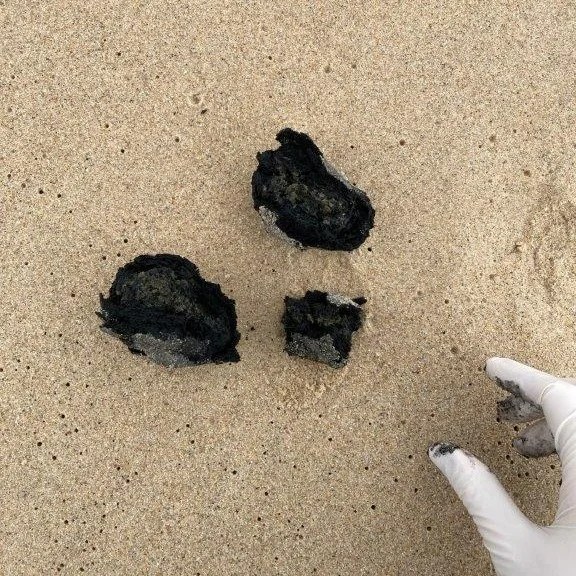
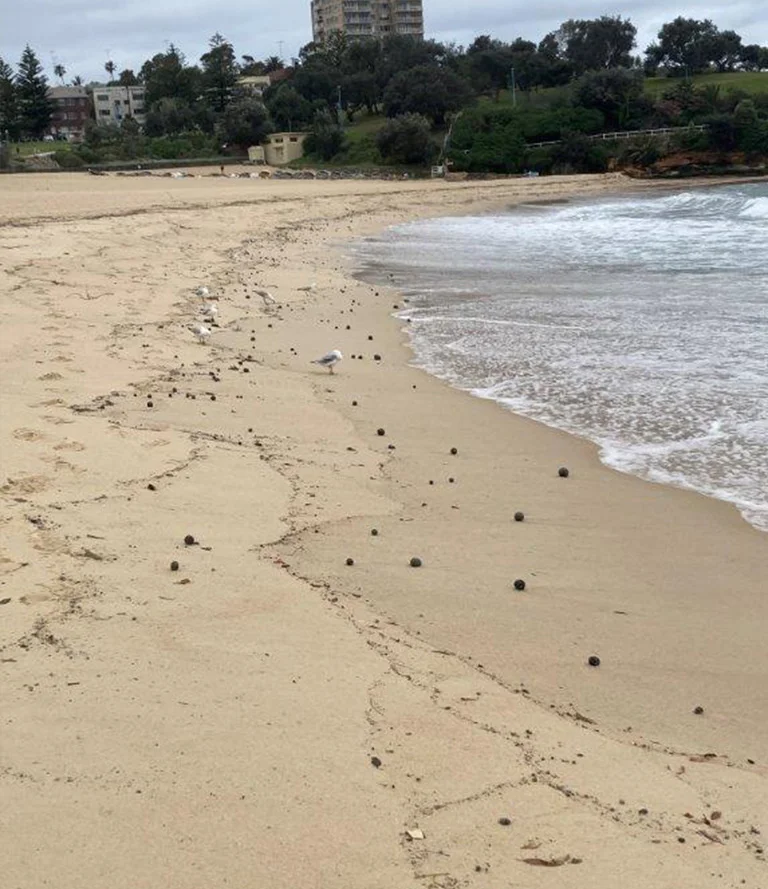
Sydney Water faces a formal pollution reduction order requiring it to remove a massive build-up of fats, oils and grease from its Malabar wastewater treatment plant, after investigations confirmed the accumulation as the most likely source of the debris balls that closed Sydney’s eastern beaches repeatedly from October 2024 to February 2025.


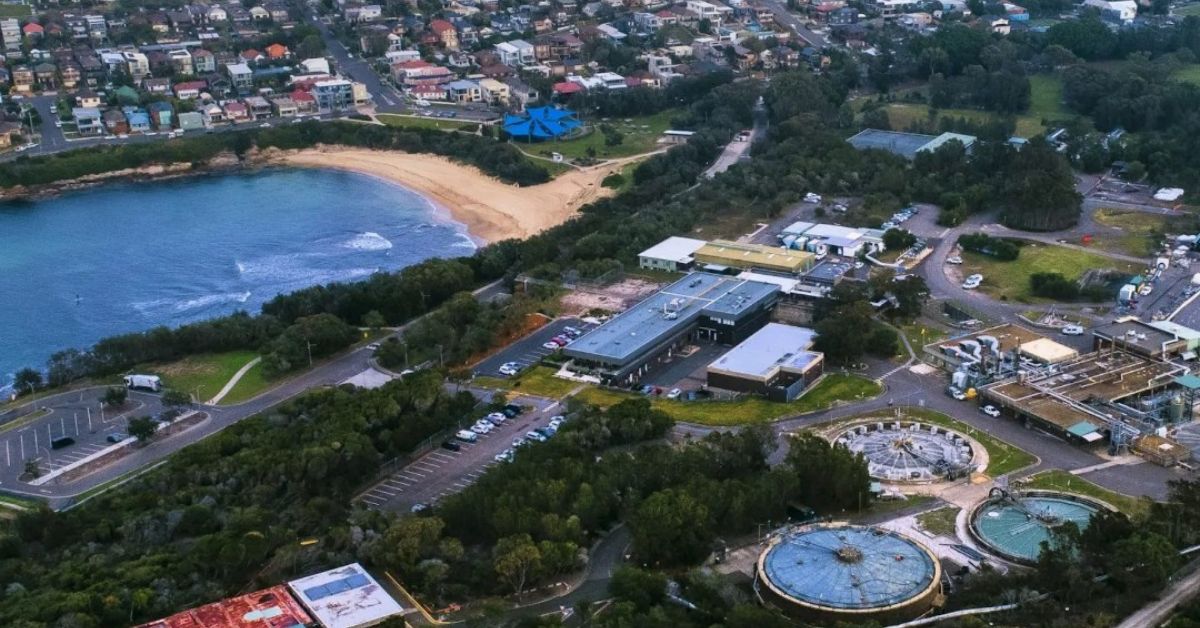
The New South Wales Environment Protection Authority issued the order on 23 February 2026, following months of investigation that traced the greasy black spheres washing up on beaches from Coogee to the state’s south coast to a deep, largely inaccessible chamber inside the Malabar deep ocean outfall. The outfall extends 2.3 kilometres offshore and handles wastewater from a catchment covering much of Sydney’s inner-east and western suburbs.

For residents of Maroubra, Coogee and Malabar, who watched clean-up crews comb their beaches through the summer of 2024–25, the EPA’s order represents its most significant regulatory escalation so far in response to a crisis that disrupted one of the eastern suburbs’ most-used coastlines, after the agency issued a Preliminary Investigation Notice in April 2025.

What the Fatberg Is and How It Formed

Investigators including Professor Stuart Khan, a wastewater engineer from the University of Sydney and chair of the EPA’s advisory panel, traced the source of the debris to decades of accumulated fats, oils and grease adhering to the inner walls of pipes feeding into the Malabar system. When heavy rainfall events strike, those accumulated deposits dislodge and flush through the outfall tunnel into the ocean, where wave action rolls them into the black balls that beachgoers encountered on the sand.
Syndey Water
Photo Credit: Sydney Water

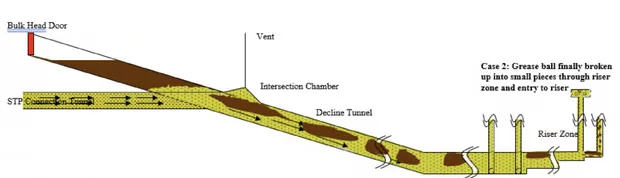
A Sydney Water assessment report from August 2025 identified the build-up as concentrated in a 300-cubic-metre chamber behind the bulkhead door of the deep ocean outfall, a dead zone beyond the accessible stopboards that workers cannot safely enter. Sydney Water estimates the fatberg could be the size of four Sydney buses, though the organisation cannot measure it precisely because of the access constraints.

Two specific events accelerated the release of debris balls into the ocean. A loss of power at the plant in October 2024 stopped the raw sewage pumps for four minutes, and the rapid pressure surge when power returned dislodged a portion of the accumulated fatberg. A similar pressure spike driven by heavy wet weather in January 2025 produced the same result.

Why Fixing It Is Not Simple

The engineering challenge at the heart of the Malabar problem is significant. The bulkhead door that provides the only access point to the outfall chamber sits underwater and can only be opened at low tide and during low system flows, making safe entry to the inaccessible area beyond the stopboards impossible under current conditions.

Taking the plant fully offline to access the chamber would require diverting sewage to cliff face discharge, a method that would close Sydney’s beaches for months. Sydney Water’s own August 2025 report acknowledged this approach had never been used and was no longer considered acceptable. That acknowledgement confirmed that the chamber was not designed with regular maintenance in mind when engineers built it in the 1980s.
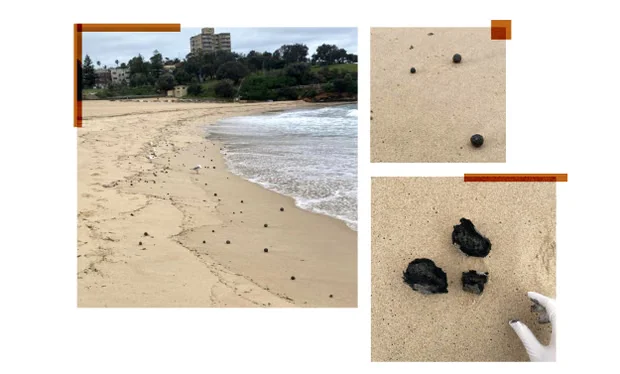
Debris balls found
Photo Credit: Sydney Water

Sydney Water already conducts regular cleaning of the accessible sections of the outfall, itself described in the report as an extremely risky operation. In April 2025, workers removed 53 tonnes of accumulated fats, oils, grease and debris balls from those accessible areas.

What the EPA’s Order Requires

The pollution reduction order covers both immediate and longer-term actions. Sydney Water must remove the build-up of fats, oils and grease from the hard-to-access bulkhead area, develop a system to capture debris overflowing from the sewer during severe wet weather events, and conduct a study into the formation and weathering of debris balls to improve tracking capability. The order also requires Sydney Water to consider artificial intelligence or other technology to monitor for the formation of future debris balls before they reach the ocean.

Planned upgrades to the Malabar system are part of a 10-year, $3 billion investment program.Sydney Water is also advancing recycled water initiatives to reduce the total volume of sewage discharged into the ocean.

That longer-term programme reflects a wider recognition that the debris ball crisis is not solely a maintenance problem at one facility. Khan noted that Sydney’s growing population and rising number of food outlets operating without proper grease traps have intensified the problem over time, allowing more fats to enter the wastewater system and form blockages at greater scale than previous decades.

Sydney Water’s Response and Community Impact

Sydney Water confirmed it would implement the EPA’s required measures in close collaboration with the watchdog, and said it was working with the independent Wastewater Expert Panel, local authorities, agencies and the community throughout the process.

That collaboration follows a period of public controversy over Sydney Water’s handling of the crisis. The utility initially insisted in November 2024 that the debris balls did not form from its wastewater discharges. Subsequent reporting established that claim was incorrect, and Sydney Water’s managing director later acknowledged publicly that the evidence pointed to the ocean outfall as the most likely source.

Community concern in Maroubra, Coogee and the surrounding suburbs remains high. The beaches most affected sit within walking distance of the Malabar outfall, and residents recall multiple closures through a period that should have been peak summer swimming season. The EPA’s order is the most direct regulatory action taken to date to prevent a repeat of those events.

Full details of the pollution reduction order and Sydney Water’s compliance program are available through the NSW EPA at epa.nsw.gov.au. Sydney Water’s own account of the debris ball investigation and planned works is available here.


Published 2-March-2026.
Violence Erupts Outside Maroubra McDonald’s as Bystanders Look On

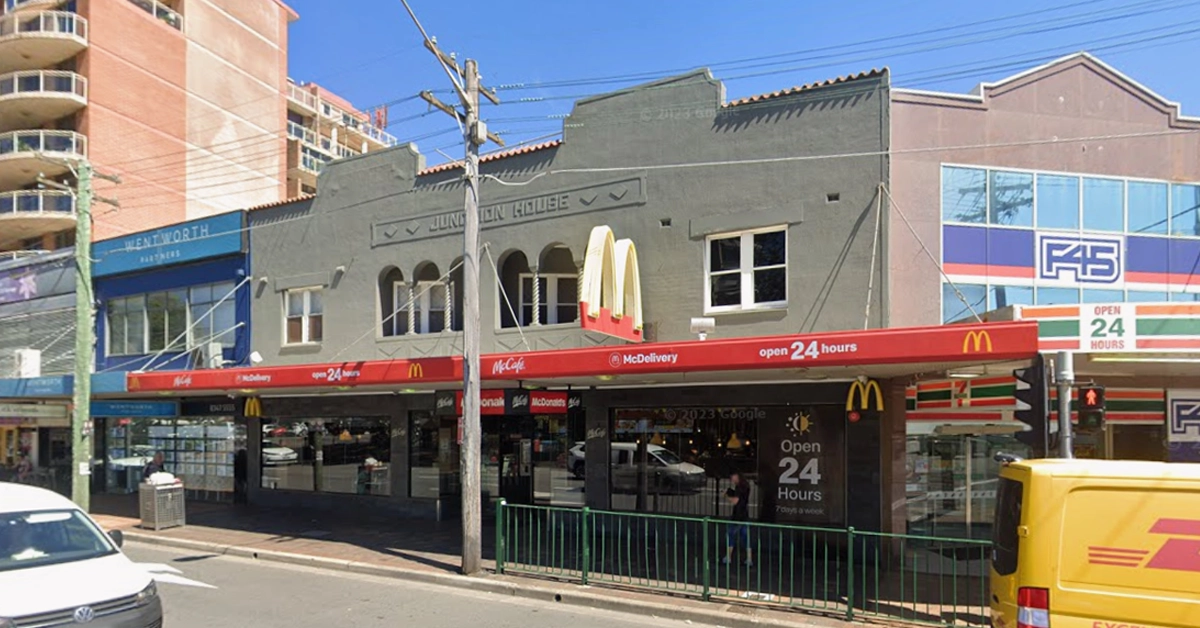
A disturbing brawl involving several teenage girls unfolded outside the McDonald’s on Anzac Parade in Maroubra on Saturday evening, leaving witnesses shaken and prompting fresh concerns about youth violence in the area.


Police from Eastern Beaches Police Area Command were called to the fast food restaurant at approximately 5.45pm on 14 February following reports of a fight. Footage filmed by a passing motorist captured the confrontation, which showed two girls allegedly attacking another girl on the footpath before dragging her onto the busy road.

The video depicts one alleged attacker repeatedly striking the victim, including pulling her hair and kicking her whilst she lay on the pavement near the intersection. A second girl, believed to be attempting to help the victim, was then set upon by one of the alleged attackers.

The witness who recorded the incident told news.com.au they were simply driving to work when the fight broke out. The footage shows dozens of pedestrians walking past, with only one woman appearing to call for assistance whilst others watched from a distance.

Police attended the scene and spoke with four females aged 12, 17, 18 and 21. The three younger females were released pending further enquiries, whilst the 18-year-old woman was taken to Maroubra Police Station where she was charged with affray. She was granted conditional bail to appear at Downing Centre Local Court on 6 March 2026, according to IBTimes UK.

The incident has sparked debate on social media, with many questioning why bystanders did not intervene to stop the violence.

Domestic violence advocate and author Ashlee Donohue has expressed alarm about what she describes as increasing youth violence in Maroubra. Ms Donohue is CEO of Mudgin-Gal Aboriginal Women’s Centre and has presented at United Nations forums on violence prevention.

Ms Donohue referenced a separate incident on Maroubra Bridge on 31 January, where a 14-year-old girl suffered serious injuries, including a collapsed lung, following an alleged assault by a group of girls. She believes social media is playing a role in fuelling these attacks, with perpetrators filming the violence to gain attention online.

“They are doing this to post it online to get likes and views,” Ms Donohue told the Daily Mail. She has called for changes to legislation that would hold those who film or encourage violence equally accountable as those who carry out the assaults.

Ms Donohue said the 14-year-old victim from the January incident had been lured to a location by a schoolmate under the pretence of hanging out at the beach, only to be set upon by several girls whilst approximately 15 others watched and encouraged the violence.

“This assault was brutal and planned,” she said. She noted that police have laid charges against several teens in relation to that incident, but has made a public appeal to meet with the parents of those involved.

The latest violence has rattled some Maroubra residents who remember when the suburb was synonymous with the Bra Boys surf gang in the 1990s. That group became notorious for territorial disputes and violent confrontations, gaining national attention through their 2007 documentary narrated by Russell Crowe.

Whilst Saturday’s incident resulted in charges, the broader question of how to address youth violence and the role of social media in amplifying these confrontations remains a concern for the local community.


Anyone with information about the Anzac Parade incident is urged to contact Crime Stoppers on 1800 333 000.

Published 16-February-2026

Probus in Maroubra: Staying Connected After Full-Time Work

For many people, retirement doesn’t signal a desire to slow down so much as a shift in how time is spent. Long-established community groups such as Probus exist for that in-between space — where people are no longer working full time but still value conversation, activity and shared interests.


Probus is an international, not-for-profit association that brings together retired and semi-retired people through locally run clubs. The name comes from PROfessional and BUSiness, reflecting its origins among people who had spent much of their lives in structured working environments. Over time, however, Probus has evolved well beyond those beginnings and today welcomes anyone no longer in full-time work who is interested in staying socially, mentally and physically active.

Where Probus fits in the wider community

Probus clubs are sponsored by Rotary, a relationship that dates back to Probus’s beginnings in the 1960s. While Rotary provides the initial sponsorship and ongoing support, each Probus club operates independently, managing its own activities and membership.

Across Australia, there are around 1,400 Probus clubs, all operating as non-political, non-sectarian social clubs. Probus does not engage in fundraising and exists solely to support connection, learning and companionship in retirement.

Membership fees are deliberately kept modest, consisting of a once-off joining fee and an annual fee which covers administration, insurance and venue costs. Details are provided by the Club to would-be members during the interest meeting.

Upcoming meeting in March

For those curious about whether Probus might be a good fit, an interest meeting for the newly formed Maroubra Junction Probus Club will be held in March.

The meeting will take place on Tuesday 10 March, at Juniors Maroubra, 946 Anzac Parade (corner of Haig Street), with arrival from 9.45am for a 10.00am start. Attendees are invited to meet current members, learn how the club operates and enjoy a free morning tea.

The meeting is open to anyone who is retired or semi-retired, whether or not they have previously been involved with Probus. People who are unable to attend on the day can still register their interest and be kept informed about future meetings.


If you’re not based in Maroubra, Probus also offers a “Find a Club” tool through its national network to help people locate nearby clubs in other suburbs.

Finding out more

For information about the March interest meeting or Probus more broadly, enquiries can also be directed to Ethan Haber on 1300 630 488, or via the Probus South Pacific website.

For many members, Probus isn’t about replacing work — it’s about staying engaged with people and ideas after work ends. And for those looking to share the article with a friend or family member approaching retirement, it offers a simple answer to a common question: what comes next?

Published 10-Feb-2026

Maroubra Beach Drowning: International Student Named After Search Effort

A swimmer who entered the water at Maroubra Beach in Sydney’s east did not return to shore and was later found after a multi-day search.


What Happened At Maroubra Beach

Fangqi Peng, 30, was at Maroubra Beach on Sunday afternoon with three friends who were collecting sea snails along the shoreline.

He entered the water alone to try a newly purchased diving mask, telling the group he would return shortly. The others continued searching along the rocks and shoreline, but their view was partially blocked and they did not see him return.

Maroubra Beach drowning
Photo Credit: Pexels

Alarm Raised And Search Begins

When the group prepared to leave, they realised Peng had not come back. Emergency services were alerted about 4 p.m. on Sunday, 1 February, after lifesavers also noticed a swimmer enter the water and not return to shore.

The beach was cleared as a precaution while the search commenced, with helicopters and watercraft deployed during the response.

Search Conditions And Recovery

Search crews continued efforts over the following days, with sea conditions affecting operations at times. Police later confirmed a man’s body was located at about 12:20 p.m. on Tuesday, 3 February.

Formal identification processes were still to be completed at the time of reporting, but police said the body was believed to be the missing swimmer. A report will be prepared for the coroner.

Sydney beach incident
Photo Credit: Wikipedia

Background On The Swimmer

Peng had moved to Australia from Harbin in north-eastern China more than two years ago. He was studying at university and working part-time in construction.

Friends said he regularly visited Maroubra Beach to collect sea snails and was confident in the water.

Friends’ Reaction


Friends described Peng as cheerful, easygoing and kind, and said his death had been difficult to accept because it occurred suddenly.

Published 5-Feb-2026

Search Suspended for Missing Swimmer at Maroubra Beach

Emergency services have suspended their search for a man in his 30s who disappeared while swimming at the southern end of Maroubra Beach on Sunday afternoon.


The man entered the water around 4pm but failed to return to shore, prompting lifesavers who witnessed him going into the surf to raise the alarm when he did not resurface.

A major multi-agency response swung into action, with multiple helicopter crews scanning the area from above whilst jet skis and water police conducted searches from the water. The entire beach was evacuated following a shark alarm as emergency crews flooded the coastline.

According to NSW Police, the man was with friends at the time of the incident. Officers from the Eastern Beaches Police Area Command coordinated the response alongside Marine Area Command, Surf Life Saving NSW, and aerial support from the LifeSaver21 helicopter.

However, worsening weather conditions and fading light forced authorities to make the difficult decision to suspend the search around 6pm on Sunday evening. Deteriorating visibility as a storm system moved through the area meant helicopter crews had to be grounded, with conditions deemed too dangerous to continue operations safely.

The search resumed at 8am on Tuesday morning, with similar resources deployed despite challenging sea conditions continuing to hamper efforts.

The incident marks another tragedy for the local beach community during what has been a particularly dangerous summer period for Sydney’s coastline. Earlier in the New Year period, multiple drownings and rescues occurred across Sydney’s eastern beaches, prompting authorities to issue repeated warnings about dangerous surf conditions.


Anyone with information about Sunday’s incident is urged to contact Crime Stoppers on 1800 333 000 or visit nsw.crimestoppers.com.au.

Published 1-February-2026

Maroubra Beach Briefly Closed After Shark Sighting During Australia Day Weekend

Maroubra Beach was temporarily closed on Sunday afternoon after a member of the public reported seeing a shark in the water, adding to a string of closures across Sydney beaches during the Australia Day long weekend.


The alarm was raised just after midday on Sunday, with swimmers evacuated from the water as a precautionary measure. The beach was quickly reopened around 12.25pm after drone surveillance and patrol found no sharks in the area, according to Surf Life Saving NSW.

Local beachgoer Olea Chu described hearing the horn blast at noon, followed by an announcement urging everyone to exit the water. Around 20 minutes later, a second horn sounded to alert the public that the shark had gone.

“It was a bit of a surprise because it’s our first time at the beach,” Ms Chu said. Despite the brief scare, she said she still felt safe thanks to the lifeguards on duty.

The closure came during a busy weekend for Sydney’s coastal lifesavers, who managed multiple beach evacuations across the metropolitan area following several shark sightings. The precautionary measures were implemented after four shark attacks occurred in less than 48 hours earlier in the week.

On Monday, Australia Day celebrations were disrupted along the NSW coast with closures at multiple popular beaches including Manly Beach, which was shut twice following fresh shark sightings, and Palm Beach, which also saw a brief closure.

Further north on the Central Coast, Terrigal Beach closed and reopened twice over the long weekend after separate shark sightings on Saturday evening and Sunday morning.

As of Thursday morning, Palm Beach on Sydney’s Northern Beaches remained closed following another shark sighting, with beachgoers urged to follow lifeguard instructions and stay out of the water while monitoring continues.


Surf Life Saving NSW has encouraged beachgoers to follow lifeguard instructions and remain out of the water at closed beaches, as patrols and monitoring continue.

Published 29-January-2026

Malabar Network Overhaul Follows Debris Ball Incidents at Maroubra

A large-scale wastewater upgrade program has been outlined following debris balls washing ashore near Maroubra, with investigations linking the material to the Malabar treatment system.


Debris Balls And Beach Closures

From late 2024 through early 2025, black, grease-like debris balls were reported along several NSW coastlines, including beaches near Maroubra. The incidents raised water quality concerns and resulted in temporary beach closures while clean-up and testing were carried out.

Laboratory testing later confirmed the debris was most likely connected to the Malabar wastewater treatment system, which discharges treated wastewater via a deep ocean outfall.

What Investigations Revealed

Analysis of collected samples found the debris was largely made up of fats, oils and grease, alongside smaller amounts of petroleum-based material and other waste products such as hair and fibres.

The findings pointed to pressure within the wastewater network, particularly during periods of high load, as a contributing factor to the formation of the debris balls.

Scope Of The Upgrade Program

A $3 billion upgrade program is planned over 10 years, focusing on reducing the volume of wastewater requiring treatment and discharge through the Malabar outfall.

The Malabar system is one of the largest wastewater networks in Australia, servicing close to two million residents across Sydney’s south-west, including Fairfield, Campbelltown and Liverpool.

Photo Credit: RandwickCityCouncil/Facebook

Facilities Prioritised First

Initial works will concentrate on the Glenfield and Liverpool water resource recovery facilities, with refurbishments and expanded processing capacity planned.

A new secondary treatment process at Liverpool forms part of the first stage, with further upgrades across the wider network scheduled progressively.

Operational Measures Alongside Construction

In addition to infrastructure works, the response includes increased inspection and cleaning of ocean outfall screens, strengthened trade-waste controls, and expanded education efforts targeting fats, oils and grease entering the system.

These measures are intended to reduce the risk of similar debris reaching beaches near Maroubra while longer-term upgrades are completed.

What Comes Next

Ongoing coordination between Sydney Water, the NSW Environment Protection Authority and an independent wastewater expert panel is expected to continue throughout the rollout period.


Information released alongside the program indicates impacts are expected to be limited, with any disruption largely confined to construction noise and vehicle movements near treatment facilities.

Published 19-Jan-2026

Maroubra Records Equal Highest Drowning Toll in Sydney

Maroubra has emerged as one of Sydney’s most high-risk surf beaches, with long-term data showing it records the equal highest number of fatal drownings among sandy beaches in the city.


A Two-Decade Pattern At One Beach

Data spanning more than 20 years shows Maroubra Beach recorded 10 fatal drownings between July 2002 and early January 2026. This is the highest number recorded at any Sydney sandy beach during that period, shared with Bondi Beach.

Across Sydney, 79 confirmed drowning deaths were recorded at sandy beaches over the same timeframe. These figures do not include incidents involving rock platforms, ocean pools or boating activities.

Sydney beaches
Photo Credit: Google Maps

National Figures Put Local Risk In Context

The National Drowning Report 2025, produced by Royal Life Saving Australia in partnership with Surf Life Saving Australia, recorded 357 drowning deaths nationwide over the past 12 months.

This figure sits 27 per cent above the 10-year average. The report found 43 per cent of drowning deaths occurred in coastal locations, including 82 deaths at beaches.

Who Faces The Greatest Risk

While children aged five to 14 recorded the lowest drowning rates, risk increased sharply among people aged 15 to 24. Drowning rates were above the long-term average for every age group over 45.

One-third of all drowning deaths involved adults aged 65 and over, with the highest rates recorded among those aged 75 and older.

Maroubra drowning risk
Photo Credit: Google Maps

Behaviour Changes And Coastal Exposure

Experts attribute part of the recent increase in drowning deaths to changes in coastal behaviour following pandemic disruptions. These include missed swimming lessons, increased boating activity and greater exposure to uncontrolled or remote coastal locations.

Public awareness of beach hazards does not always translate into safer decision-making, particularly in exposed surf environments.

How Maroubra Compares Across Sydney

Mapping of drowning deaths across Sydney’s surf beaches over more than two decades shows Maroubra consistently ranks among the locations with the highest number of fatal incidents at sandy beaches.

This places Maroubra as a clear example of broader coastal safety risks identified at both city and national levels.

Outlook


Long-term data shows Maroubra remains one of Sydney’s most consistently high-risk surf beaches. National figures indicate coastal environments continue to account for a significant share of drowning deaths, reinforcing the ongoing importance of beach safety awareness.

Published 13-Jan-2026

Teen Ironman Ethan Callaghan Challenges Ali Day at Maroubra in Tight Iron Series Battle

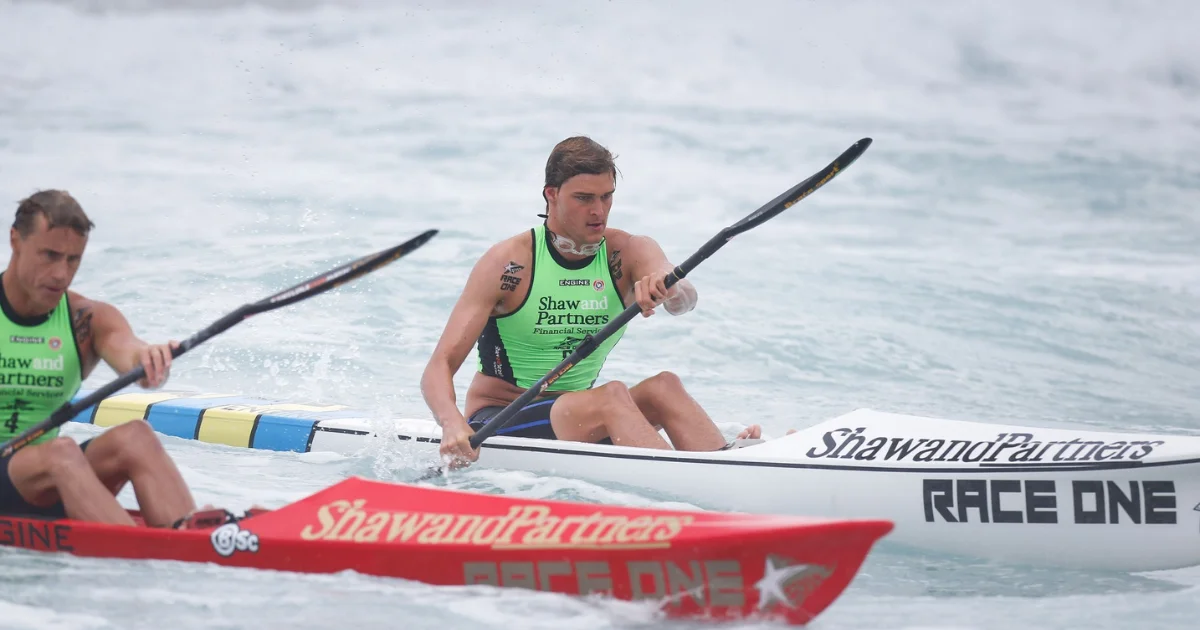
Wild conditions and a vicious shore break at Maroubra tested Australia’s elite ironmen and ironwomen in round five of the Shaw and Partners Iron Series, with a captivating generational battle emerging at the top of the leaderboard.


Read: Powerful Surf Re‑Exposes Hereward Shipwreck off Maroubra Beach


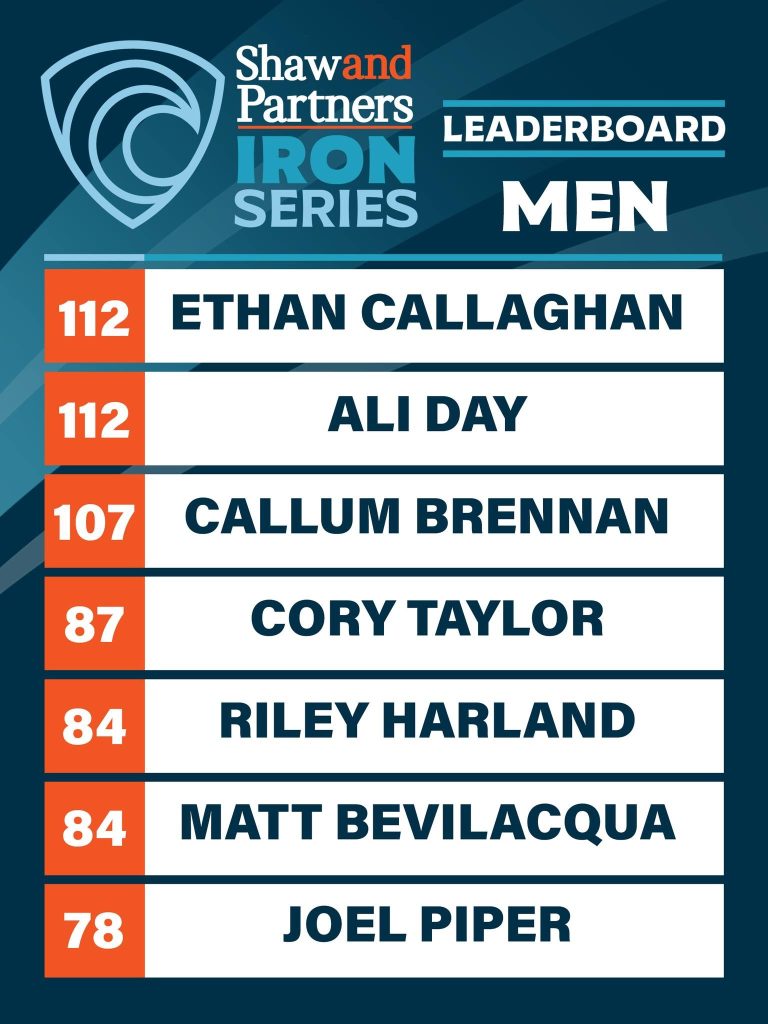
The local beach’s washing machine-like surf proved the perfect testing ground for 19-year-old rising star Ethan Callaghan to claim his second series win of the season, drawing level with his childhood hero Ali Day on 112 points with just two rounds remaining.

Photo credit: Facebook/Shaw and Partners Iron Series

For Day, the 10-time Coolangatta Gold champion who retired from that prestigious event after his October victory, Maroubra delivered a setback to his hopes of claiming another professional series title. The ironman great could only manage fifth place as Callaghan led from the front in treacherous conditions.

The weekend’s racing at Maroubra showcased both the skill and endurance required in surf lifesaving competition. Competitors found themselves in battles of survival as waves swallowed athletes, equipment soared through the air, and the vicious shore break tested even the most experienced campaigners.

Conditions were brutal, according to 21-year-old Callum Brennan, who won Saturday’s round four and sits third overall on 107 points, just five behind the leaders. The young gun from Currumbin described the racing as hectic as competitors battled the elements.

For Callaghan, the Burleigh Heads ironman whose father Travis competed in the Uncle Toby’s series in the early 2000s, the Maroubra triumph was both exhilarating and nerve-wracking. The teenager admitted to significant anxiety heading into the ski leg, where he remains the least experienced paddler in the professional field. Despite his concerns about the challenging surf, Callaghan acknowledged he’s still learning but was pleased with how the race unfolded.

He beat Burleigh clubmate Joel Piper and Northcliffe’s Zach Morris for a Queensland sweep of the podium on Sunday.

The significance of Callaghan’s performance extends beyond the points table. Just a season ago, he was a Next Gen competitor who had won a spot in his first professional field alongside the man he’d idolised growing up. Now he’s threatening to deny Day another series crown.

Callaghan has previously spoken about his admiration for Day, citing the resilience and toughness the champion showed in coming back from potentially career-ending injuries to return to the top of the game and establish himself as one of the greatest ironmen of all time. Those same qualities of mental fortitude and determination will be crucial as the teenager seeks to maintain his momentum heading into the final rounds.

The women’s competition delivered its own breakthrough moment at Maroubra, with Burleigh’s Lily O’Sullivan claiming her maiden round win despite being confined to bed with illness in the days before competition. O’Sullivan defeated Newport’s Lizzie Welborn and Northcliffe’s Emily Doyle, moving into 10th place overall.

Photo credit: Facebook/Shaw and Partners Iron Series

In the women’s overall standings, Lucy Derbyshire and Carla Papac share top spot on 114 points, with Tiarnee Massie third on 97 points.

The competitor said her illness may have worked in her favour, forcing her to race smartly rather than rely on superior fitness in the challenging surf conditions. O’Sullivan described the victory as the fulfilment of a dream she’d held since she was about five years old, having spent the past five years in the series watching other competitors before finally claiming her first win. She expressed immense pride in the achievement.

The weekend’s competition at Maroubra also carried deeper significance for the surf lifesaving community. Newport’s Charlie Verco, who finished second in Saturday’s ironman, spoke about the resilience shown by local clubs in the wake of the Bondi tragedy in December.

Verco, who happened to be at Bondi on the night of the shooting attack, described the experience as frightening. He reflected on how the incident dramatically changed the beachside community in the following weeks, with crowds dropping from tens of thousands to almost nothing as Bondi became a ghost town patrolled by police officers. However, he noted the beach has bounced back quickly with strong community support.

The Sydney surf lifesaver praised the volunteer lifesavers who opened their clubs and rushed to help those injured and affected by the shooting attack. He emphasised that these volunteers, who typically deal with swimming and surf-related emergencies, showed remarkable bravery by putting their lives on the line in circumstances they were never prepared for. The tragedy, Verco suggested, highlighted the dedication and courage within the surf lifesaving movement.


Read: Maroubra Coastal Foraging Walk Listed in Ocean Lovers Festival 2026


As the series heads to the Gold Coast for its final two rounds on January 31 and February 1, the battle lines are drawn. Callaghan and Day remain locked together at the top, with young gun Brennan lurking just behind. 

Published 13-January-2026

Pioneers Park Patrols Increase After Pets Fall Sick in Baiting Scare

A confirmed dog-baiting incident at Pioneers Park in Malabar has prompted urgent warning signs and extra patrols of the off-leash area, leaving local dog walkers on edge as authorities urge the community to stay alert to protect pets from harm. 


Locals have expressed concern about pet safety, with some sharing past experiences of pets falling ill or, in one case, dying after visiting the park. One resident reported their dog consuming what appeared to be minced meat found in bushes, and the animal was taken to a vet for treatment before being monitored for potential poisoning. The meat sample was kept in case authorities wanted to test it. 

Calls for additional security measures have grown louder on neighbourhood community pages, with several people urging cameras and more frequent park inspections to deter further harmful behaviour. 

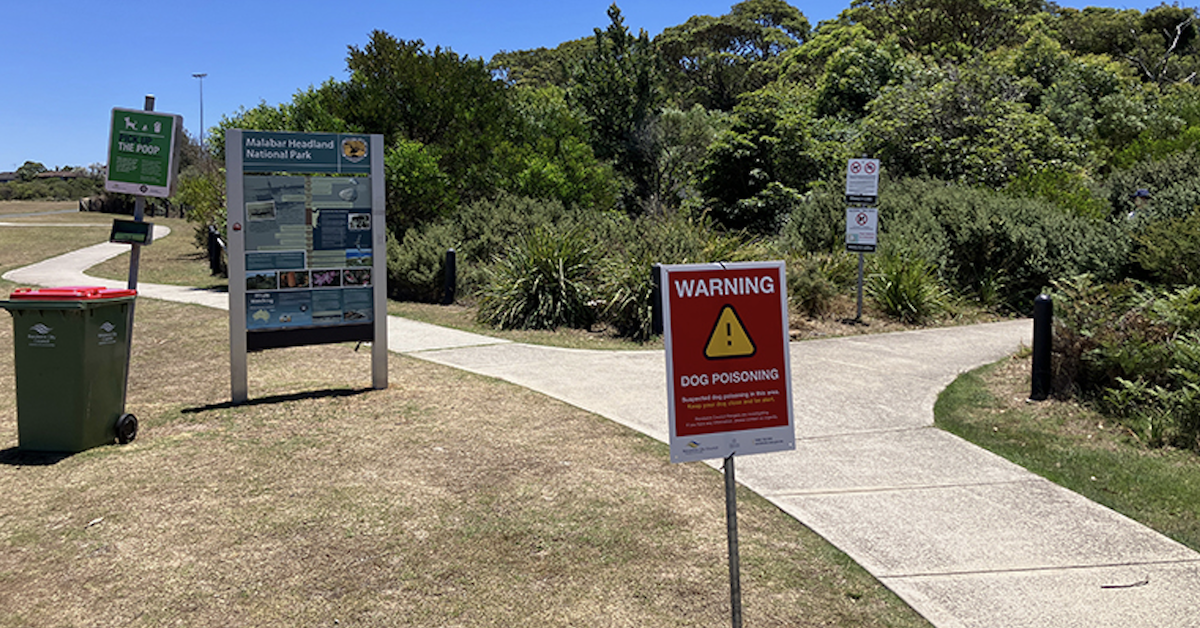
Randwick City Council responded swiftly after being notified of the suspected incident at the northern end of Pioneers Park, installing warning signage and increasing ranger patrols to search for suspicious materials that could endanger animals. Council said it had referred the matter to NSW Police, which is investigating, and urged dog owners to keep their dogs on leads and under close supervision while in the park. 

Photo Credit: RandwickCityCouncil

While rangers continue patrols during busy morning and evening periods, some dog owners remain cautious about bringing their pets to the beloved local green space. 

Police have not yet publicly confirmed formal reports of the incident, but Council maintains it is working closely with them to address the situation and keep the community and their pets safe. Dog walkers are encouraged to report anything unusual to either council staff or NSW Police as the investigation continues. 

Dog baiting — the intentional placement of food laced with harmful substances — is illegal and can be life-threatening for pets and wildlife. Incidents like this have stirred strong responses in other parts of Sydney as well, and local authorities stress early reporting and vigilance to prevent harm. 


The park was searched and warning signs were put in place after the incident was reported on 7 January 2026. Increased patrols and community alerts have remained active since then as further checks are conducted and police continue their inquiry.

Published 13-Jan-2026